Vigilance Fire Safety

Fire Risk Assessment for Care Homes & Specialist Settings

Assessed to PAS 79-1. Named assessor. Report in 48 hours.

What Fire Risk Assessment Do Care Homes Need?

Care homes and specialist residential settings require a fire risk assessment carried out to PAS 79-1, the methodology built specifically for premises with vulnerable, sleeping, or non-self-evacuating occupants — not the general BS 9792:2025 standard used for ordinary blocks of flats.

If you manage a care home, supported living scheme, or specialist residential setting, you’re legally required under the Regulatory Reform (Fire Safety) Order 2005 to hold a current, suitable and sufficient fire risk assessment that reflects the specific needs of your residents.
What Fire Risk Assessment Do Care Homes Need?
Why Care Homes Are Different

Why Care Homes Are Different

Care homes carry a risk profile that standard residential fire risk assessment doesn’t capture. Residents may have mobility, cognitive, or sensory impairments that rule out simultaneous or independent evacuation. Staffing levels, waking-night cover, and progressive horizontal evacuation strategy all become part of the assessment — not an afterthought.

A fire risk assessment written for a general block of flats and lightly adapted for a care setting will miss the things that actually matter here: compartmentation adequacy for a “stay put” or PHE strategy, staff training and drill competency, night-time cover ratios, and how quickly and by whom residents can actually be moved.

What a Care Home Fire Risk Assessment Covers

  • Occupant Profile & Evacuation Capability — mobility, cognitive and sensory needs of residents, and what that means for realistic evacuation time.
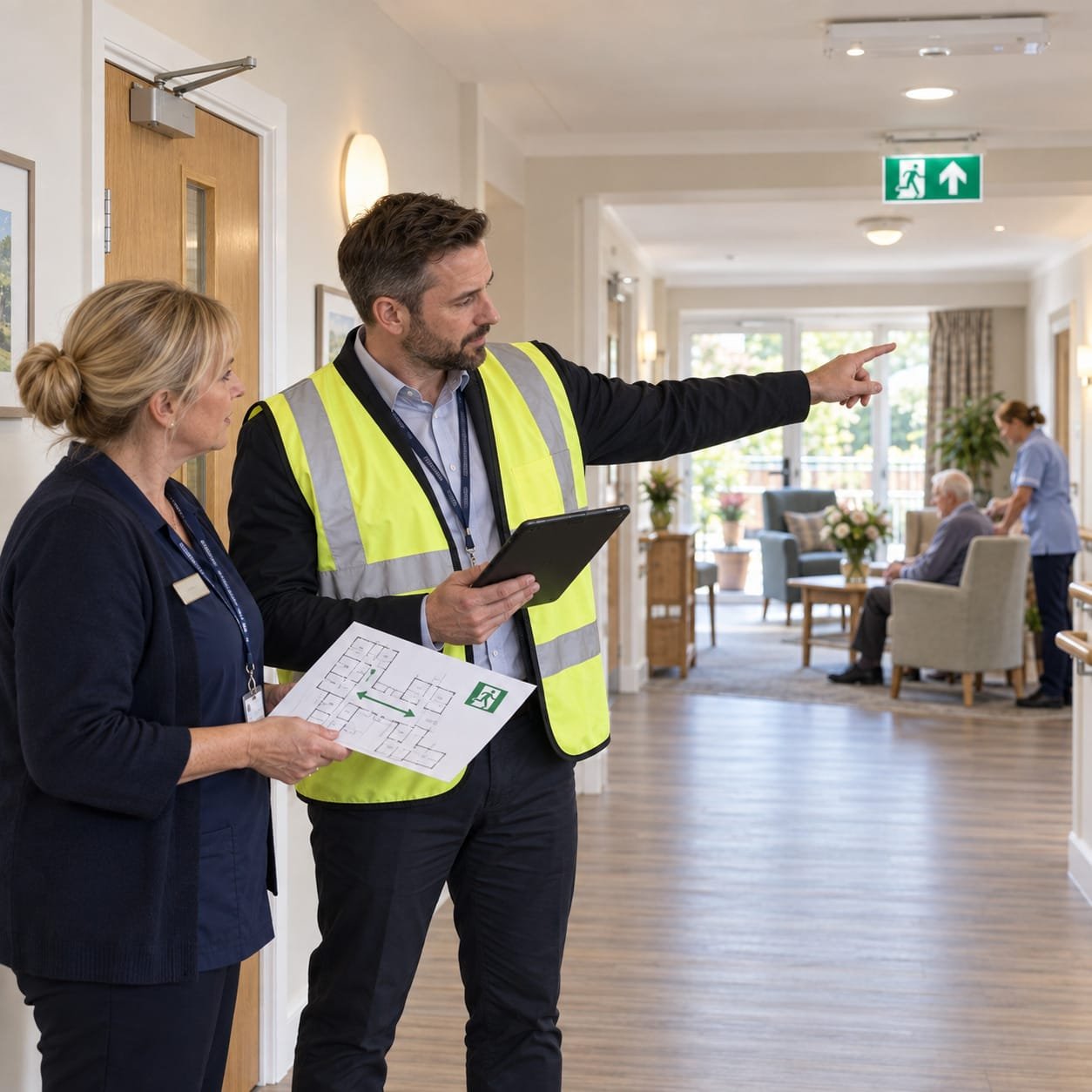
  • Evacuation Strategy — assessing whether stay-put, progressive horizontal evacuation, or full simultaneous evacuation is appropriate for your building and residents, and whether the building actually supports it.
  • Staffing & Training — day and night staffing ratios against evacuation need, PEEP (Personal Emergency Evacuation Plan) coverage, and drill/competency records.
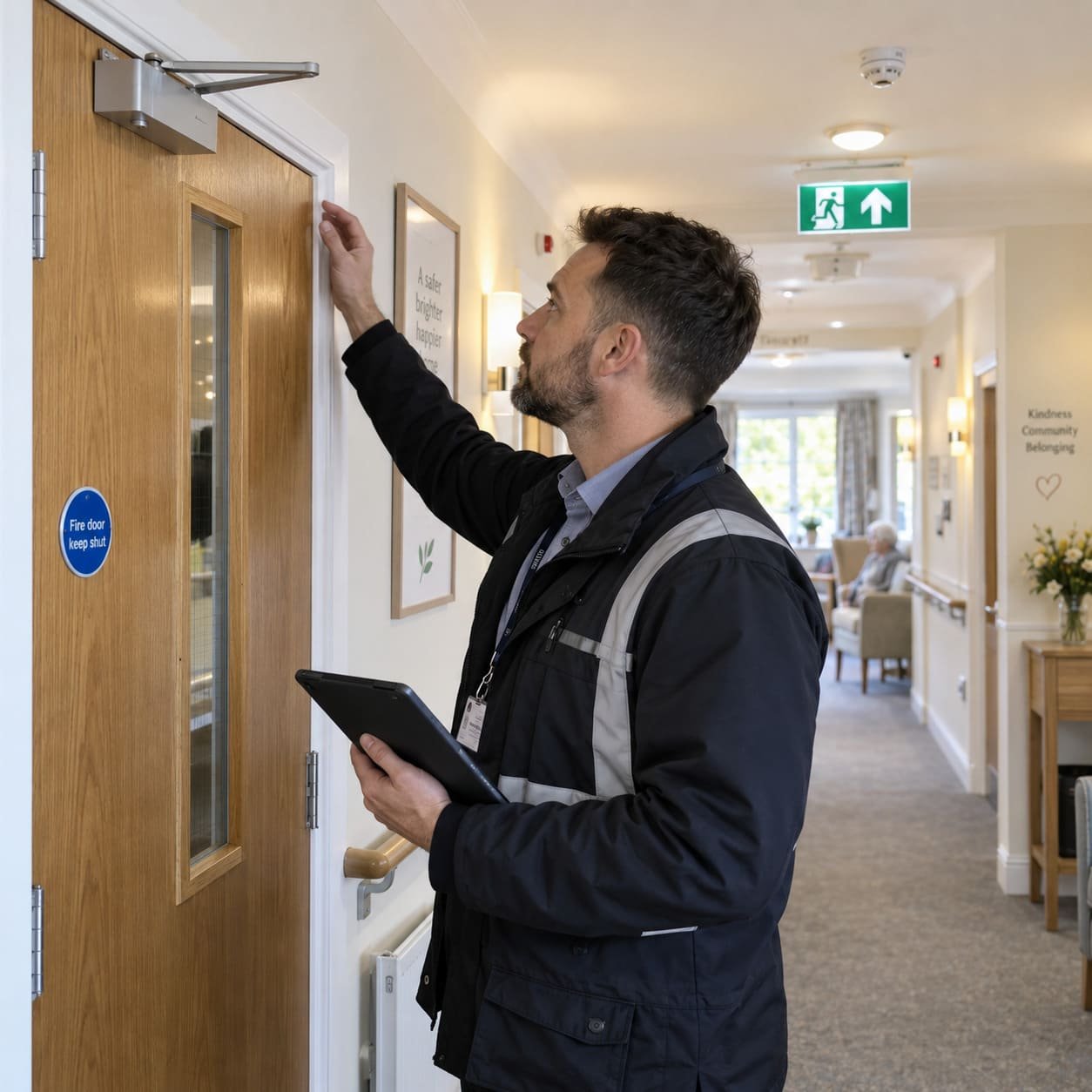
  • Compartmentation & Structural Fire Protection — fire doors, fire-resisting construction, and whether they meet the standard a “stay put” strategy depends on.
  • Detection & Alarm Systems — suitability of the fire detection and warning system for a sleeping, vulnerable-occupant population.
  • Management & Documentation — fire safety policy, logbook, PEEPs, and how they’re maintained between assessments.

Choose Us for Your Care Home Fire Risk Assessment

Vulnerable-Occupant Specialists

We assess to PAS 79-1 — not a general-purpose assessment adapted after the fact.

Named, Accountable Assessor

Every assessment is carried out personally by Ray Amoah — ABBE Level 4 qualified, DipFRA, MIFSM, FPA member. You deal directly with your assessor, not a call centre.

Regulatory-Ready Documentation

Reports structured for CQC inspection readiness and local fire authority audit, not just a generic compliance certificate.

Fast Turnaround, No Compromise on Rigour

Digital report delivered within 48 hours of the site visit.

Frequently Asked Questions

Yes. Care homes are excluded from BS 9792:2025 and are assessed instead to PAS 79-1, which accounts for vulnerable, sleeping, and non-self-evacuating occupants — factors a general residential assessment doesn’t address.
At least annually, and immediately after any material change to the building, occupancy profile, staffing model, or fire safety systems — consistent with the Regulatory Reform (Fire Safety) Order 2005’s requirement to keep the assessment current.
The “responsible person” — typically the registered care provider, home manager, or building owner — under the Regulatory Reform (Fire Safety) Order 2005.
The fire risk assessment is a core piece of evidence CQC will expect to see as part of your wider health and safety compliance, though CQC registration itself has its own separate requirements. Our reports are structured to be inspection-ready.

Care Homes Carry the Highest Duty of Care in Residential Fire Safety.

Make sure your fire risk assessment reflects that.